Is CBD Good for Bone Health? Here’s What the Studies Show

Bone looks like the most static tissue in the body and behaves like one of the least. The adult skeleton is constantly being torn down and rebuilt by two crews working opposite shifts: osteoclasts that dissolve old bone, and osteoblasts that lay down new material in its place. Osteoporosis is essentially what happens when the demolition crew starts outworking the construction crew. So when a compound turns out to act on receptors that both crews carry on their surface, an obvious question follows. Can it push the balance back the other way?
CBD is one of the most talked about compounds in the Canadian cannabis market, and questions about what it can and cannot do turn up constantly. Bone health is one of the more persistent ones. Below is a plain look at what has actually been tested, based on a review in Current Osteoporosis Reports by Hayley Palmer and Diana E. Roopchand of Rutgers University titled Phytocannabinoids and bone health. The short version is that cannabidiol has been studied in bone far more than any other cannabis compound, that most of that work was done in cells and rodents, and that the human evidence currently consists of a handful of small studies measuring blood markers rather than bones.
We want to be upfront about why we are publishing this. It is not a sales pitch. CBD is not approved anywhere, Canada included, as a treatment for any bone condition, and this article makes no claim that it is. It is simply an honest account of where the science stands for anyone curious about it. If you want to browse what we actually carry, our CBD products category is there, but read this first.
Key Takeaways
Cannabinoid receptors are genuinely involved in bone metabolism. This is not a marketing claim but something demonstrated in knockout mice going back two decades. CBD, in laboratory dishes, tends to slow the cells that dissolve bone and encourage the cells that build it. In rodents with surgically induced bone loss, CBD sometimes restored bone quality and sometimes did nothing at all, and the pattern that separates the successes from the failures looks like timing. Early intervention worked, intervention after the skeleton had already matured and lost bone did not. In fractures, CBD improved healing and strength while THC did not, and one minor cannabinoid, CBC, actively impaired bone repair even while it relieved pain, which is a useful reminder that “cannabinoid” is a category, not an ingredient. In humans, the total evidence amounts to two population surveys pointing in opposite directions, a case series of two women and one seven-day trial in 83 healthy adults that found a drop in one bone breakdown marker. Nobody has yet shown that CBD makes a human bone stronger, denser or less likely to break.
Bone Has Cannabinoid Receptors, and They Are Not Decorative
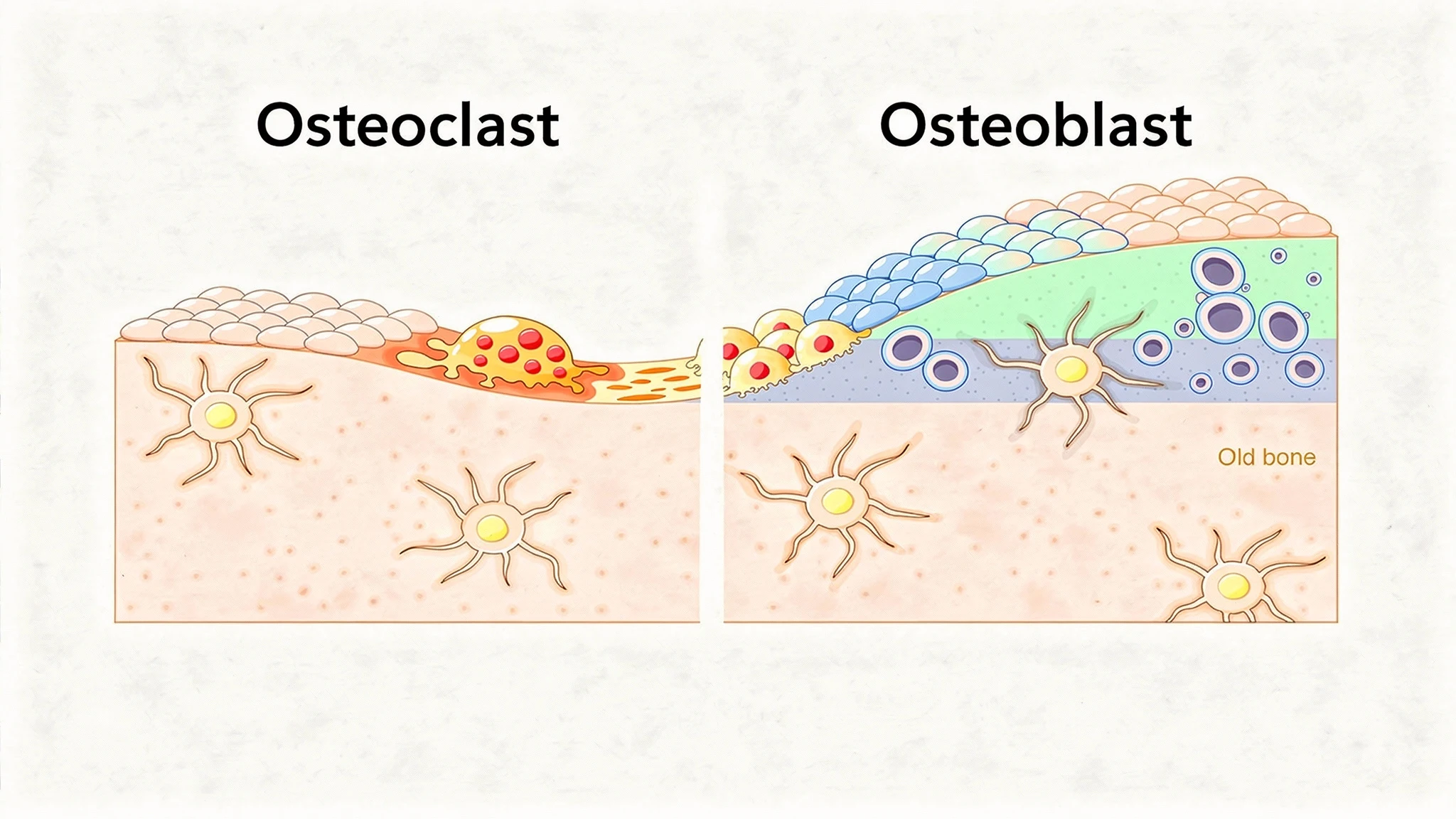
The endocannabinoid system consists of signalling molecules the body makes itself, the receptors they dock into and the enzymes that build and dismantle them. Two of those molecules, anandamide (AEA) and 2-arachidonoylglycerol (2-AG), help regulate bone homeostasis directly.
The strongest evidence that this matters comes from mice bred without one receptor or the other. Mice lacking CB1 reached a higher peak bone mass and showed less bone resorption, but went on to develop age-related osteoporosis anyway, and, in a separate line of work, were protected from bone loss after ovariectomy, the standard animal model for post-menopausal osteoporosis. The interpretation is that CB1 switches on osteoclast activity but is simultaneously needed for the bone marrow to produce osteoblasts in the first place. CB2 looks more straightforwardly protective. Mice of both sexes lacking it showed trabecular bone loss, cortical expansion and high bone turnover.
This is where the difference between cannabis compounds starts to matter. THC is a partial agonist at both CB1 and CB2. CBD binds far more weakly and acts instead as an allosteric modulator, nudging the receptors rather than switching them on, and it also blocks GPR55, a putative cannabinoid receptor that stimulates osteoclast function. Different keys, different locks, different results in bone.
One detail worth flagging for anyone who assumes findings transfer neatly between sexes. Male mice lacking GPR55 had more inactive osteoclasts and greater trabecular bone volume and thickness, while female GPR55-knockout mice did not. Sex differences in how cannabinoids behave are turning up repeatedly in cannabinoid research, including in work on CBD and epilepsy, and bone is no exception.
What CBD Does to Bone Cells in a Dish
In cell culture, CBD looks unambiguously bone-friendly. It pushed bone marrow mesenchymal stem cells toward becoming osteoblasts through CB2-dependent p38 MAPK signalling, and reversed the shutdown of osteogenic markers caused by bacterial toxin exposure. It increased stem cell migration through a combination of CB2 activation and GPR55 blockade. It raised cell viability, proliferation and osteocalcin expression in human skeletal stem and progenitor cells, and suppressed tumour-driven osteoclast formation.
Then there is the finding that complicates the story. When human osteoclasts were exposed to CBD and THC across a range of concentrations, the effect flipped with dose. At low concentrations (0.3 to 10 µM) both compounds increased bone resorption, while at high concentrations (10 and 30 µM) they inhibited both osteoclast fusion and resorption. A compound that does opposite things at low and high dose is not a compound anyone can responsibly recommend a dose of yet.
The Osteoporosis Experiments – Timing Changed Everything
Three rodent studies used the same basic model, remove the ovaries, wait for bone loss, give CBD, and got three different answers.
In C57BL/6J mice, CBD given by mouth at 25 mg/kg/day, five days a week for 18 weeks, restored the losses in whole-body and femoral areal bone mineral density and improved trabecular quality. In Sprague-Dawley rats, CBD at 5 mg/kg/day by injection, started 13 weeks after surgery for three weeks, improved femoral bone volume fraction and trabecular number and increased the maximum force the femurs and vertebrae could withstand, but produced no change in femoral BMD and no change in RANKL or osteoprotegerin, the two proteins that govern osteoclast activity. And in skeletally mature Sprague-Dawley rats given CBD by osmotic pump at 5 mg/kg/day for 12 weeks, the treatment did not restore trabecular bone loss and did not reduce circulating resorption markers at all.
The review’s authors point to three candidate explanations. The route of administration differed, the age at surgery differed (growing versus mature skeleton), and orally consumed CBD is biotransformed by gut bacteria into metabolites whose effects on bone nobody has yet studied. Whether the animal was still growing appears to be the decisive variable, which, if it holds, is bad news for the population most interested in the answer.
Broken Bones – CBD Helped, THC Did Not
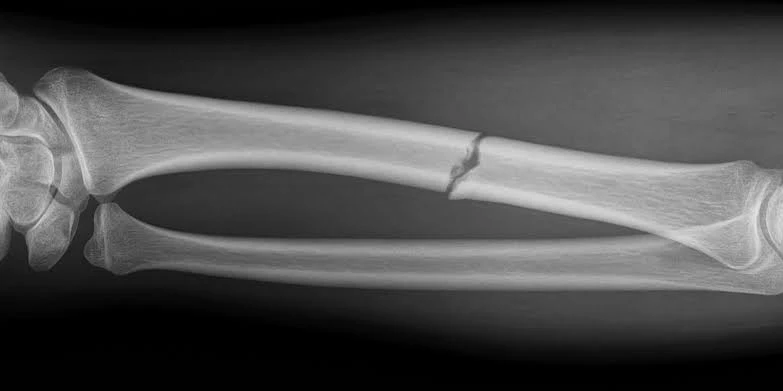
In mice with femoral fractures, CBD delivered by osmotic pump reduced the delayed healing caused by ovariectomy, but only when treatment started before the fracture, not at the moment of it. In healthy male mice, CBD pretreatment did not improve bone quality or strength at all, though it did restore the bone density lost to fluoxetine treatment.
Elsewhere the results were more consistent. Rats with severe spinal cord injury given CBD at 5 mg/kg/day for 14 days showed higher serum osteocalcin, lower collagen type I telopeptide, and improved femoral density, trabecular quality and mechanical properties. Rats with surgically created radial bone defects healed better when the scaffold implanted into the gap carried CBD-loaded microspheres than when it did not.
Two studies compared CBD directly against THC, which is where the picture sharpens. In a rat lumbar fusion model, CBD improved healing and new bone formation, with osteogenic factors elevated at two weeks but not at eight, suggesting CBD acts early in the repair sequence. Bone healing in rats given THC alone, or CBD and THC together, was unchanged. In a separate experiment, CBD but not THC improved maximal load and work-to-failure in healing bone, and increased expression of an enzyme required for collagen crosslinking.
Gums and Jawbone Have Their Own Literature
Periodontitis destroys the alveolar bone that holds teeth in place, and it is one of the better-studied targets here. CBD by injection at 5 mg/kg/day for 30 days reduced periodontitis-driven alveolar bone loss in rats and suppressed RANK/RANKL expression. Oral CBD combined with taurine cut inflammation, pocket depth and bone loss over 21 days. Topically applied CBD prevented bone loss through a different inflammatory pathway entirely.
Dental pulp stem cells, an emerging tool in regenerative dentistry, responded to CBD with improved viability, migration and osteogenic differentiation, and CBD-treated microspheroids derived from them promoted healing of skull defects in mice. Notably, only one study has tested THC in this setting, and no minor cannabinoids have been tested at all.
CBG and CBC Are Not Smaller Versions of CBD
More than 100 minor phytocannabinoids have been identified in cannabis, and the handful that have been tested in bone behave distinctly. In a mouse tibial fracture model, CBD and CBG both increased bone volume fraction, density and strength while reducing pain. CBC relieved fracture pain but impaired bone repair, an outcome no consumer would infer from a label listing it as a non-intoxicating cannabinoid.
In an osteoarthritis model, CBD oil and a CBD+CBG oil both reduced pain and inflammation and normalised movement without affecting bone remodelling, while CBG, but not CBD, protected cartilage. Compounds sold interchangeably as wellness cannabinoids are doing measurably different things in the same tissue, which is one reason product composition and testing matter so much.
Smoked Cannabis Is a Separate Question
Very little work has examined cannabis itself rather than isolated compounds. In one study, rats with titanium implants forced to inhale cannabis smoke for eight minutes a day over 60 days showed reduced trabecular bone healing around the implants, though cortical bone was unaffected. Route of administration, age, sex and hormone status all plausibly change the answer, and none of them has been systematically tested.
What Has Actually Been Measured in Humans
Four pieces of human evidence exist, and they do not agree.
The US National Health and Nutrition Examination Survey found no association between cannabis use and bone mineral density among people aged 20 to 59. Six weeks of daily hemp extract supplementation produced no effect on bone mineral content in overweight but otherwise healthy adults. Against that, a UK cross-sectional study reported that heavy cannabis users had lower hip and spine bone density, more fractures and higher bone turnover markers than cigarette-smoking controls.
Two small clinical studies looked at CBD and THC specifically. In a case series, two post-menopausal women with osteopenia took 100 or 300 mg of CBD daily for 12 weeks. It did not improve sleep, mood, anxiety or quality of life, but serum markers of bone turnover, CTx, P1NP, BSAP and osteocalcin, fell. And in the first controlled clinical study in this area, 38 men and 45 women took softgels containing 5 to 20 mg THC with varying CBD content twice a day for seven days. Serum CTx, a marker of bone breakdown, dropped with both products, while markers of bone formation were unchanged.
That last result is the strongest human finding available, and it is worth being precise about its limits. Seven days, healthy adults with no bone loss to reverse, blood markers rather than imaging, and no measurement of whether any bone became stronger. A drop in a resorption marker is a hypothesis-generating result, not a treatment.
How Strong Is This Evidence, Really
Weak, and honestly so. The review says as much. The bulk of the work is in vitro or in rodents, using doses and delivery routes (osmotic pumps, intraperitoneal injection, isolated compounds at fixed mg/kg) that translate poorly to a human swallowing an oil of uncertain concentration. Sample sizes in the human studies range from two to 83. Studies disagree with each other even within the same animal model. Almost everything uses isolated CBD, while almost everything sold to consumers is a mixture. Nobody has established an optimal dose, timing or route, and the dose-dependent reversal seen in human osteoclasts means guessing is genuinely risky rather than merely unhelpful.
One disclosure from the paper itself belongs here. One of the two authors holds equity in a company in this space. That does not invalidate a literature review, but readers are entitled to know it.
The Legal Picture, and Why Canada Is Different
The concentration of research on CBD is partly a legal artefact of the United States, where most of this work was funded. The 2018 Farm Bill defined hemp extract as containing less than 0.3% delta-9 THC and made hemp legal to produce, sell and transport under US federal law, which opened the door to CBD research that remained closed for THC. The FDA has approved Epidiolex, a purified CBD solution, for certain seizure disorders, dronabinol for chemotherapy-induced nausea, and nothing at all for any bone disease.
Canada took a different road. Cannabis has been fully legal for adults here since the Cannabis Act came into force in October 2018, which means both CBD and THC can be studied, produced and sold through a regulated system rather than a patchwork of state rules. In Canada, CBD is regulated as a controlled substance under the Cannabis Act and can only be sold legally through licensed channels, not as an over-the-counter supplement on a grocery shelf. Health Canada has not approved CBD for osteoporosis, fractures or any other bone condition, and no licensed retailer is permitted to claim it treats one. What the Canadian system does offer is tested, accurately labelled product and legal access for adults, which is exactly the environment proper human research needs.
FAQ
Does CBD strengthen bones?
Not demonstrably in humans. In rodents, CBD improved bone quality, strength and healing in several experiments and failed to do so in others, with timing of treatment appearing to matter more than dose. In people, the only measured effects so far are changes in blood markers of bone turnover over periods of one to twelve weeks. No study has shown improved bone density, strength or fracture resistance in a human.
Is CBD useful for osteoporosis?
There is no clinical evidence supporting that use. The animal work that produced positive results generally started treatment before or early in bone loss. The one study that treated skeletally mature animals after bone loss had occurred found no benefit. Osteoporosis has effective approved treatments, and decisions about them belong with a physician.
Do CBD, CBG and CBC do the same thing to bone?
No. In the same fracture model, CBD and CBG improved bone volume, density and strength while reducing pain, whereas CBC reduced pain but impaired bone repair. In an osteoarthritis model, CBG protected cartilage while CBD did not. Chemical similarity between cannabinoids does not predict similar effects in bone.
Is CBD legal to buy in Canada?
Yes, for adults, through licensed retailers. CBD is regulated under the Cannabis Act rather than sold as a dietary supplement, so it comes from Health Canada licensed producers with tested, accurate labelling. Products marketed as treating bone conditions are making claims no Canadian regulator has approved, so treat any such claim with suspicion.
Disclaimer
This article is journalism about published scientific research and is provided for informational purposes only. It is not medical advice, a treatment recommendation, or a suggestion to use, purchase or discontinue any product. Cannabidiol and other cannabinoids are not approved in Canada or elsewhere for the treatment of osteoporosis, fractures, periodontal disease or any other bone condition. Cannabinoids can interact with prescription medicines, including drugs used to treat bone loss. Anyone with concerns about bone density, fracture risk or bone healing should consult a qualified medical professional rather than acting on research findings reported here.