Combining Cannabis & Psilocybin – Effects, Risks & What to Expect
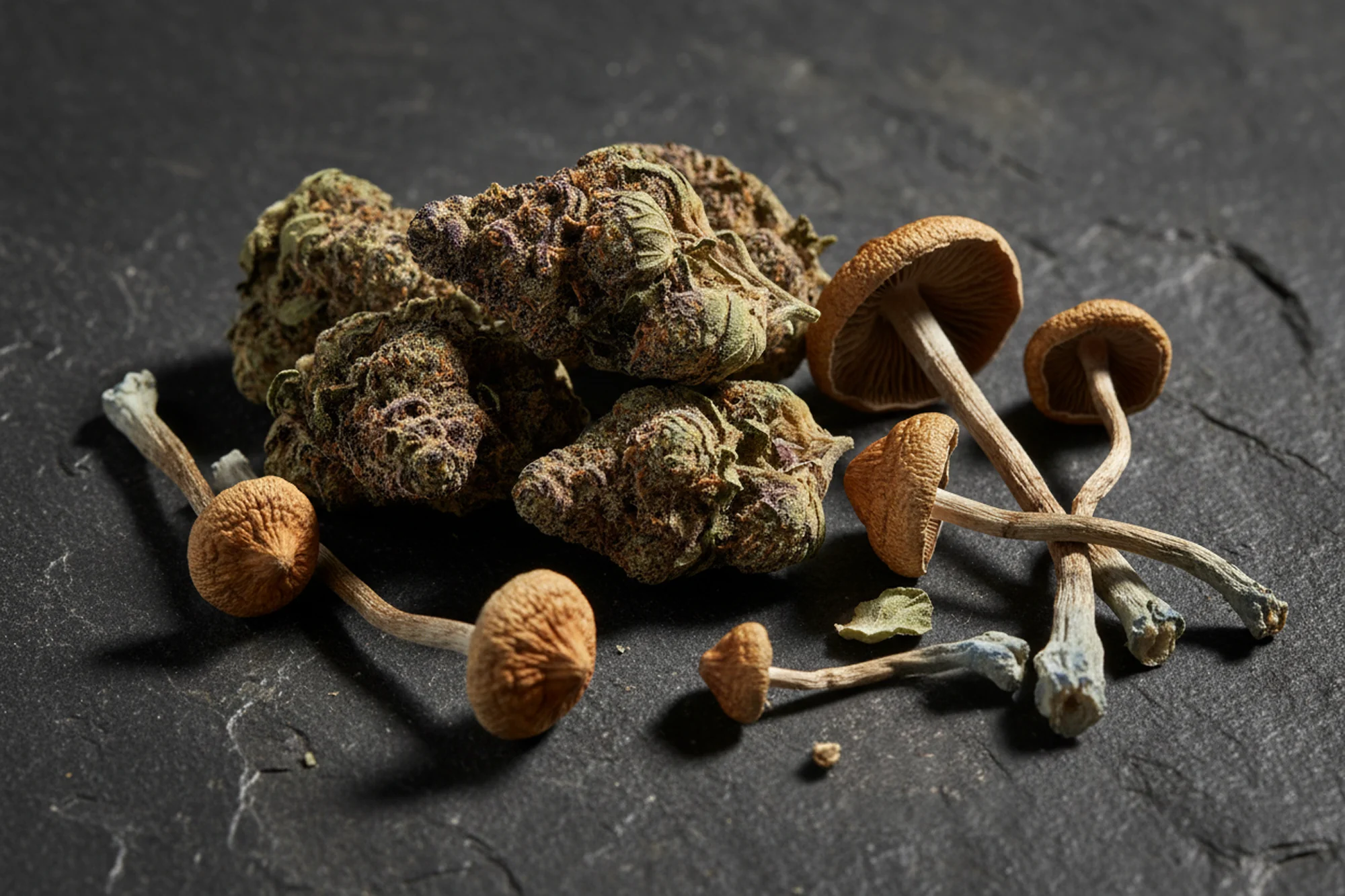
Mixing cannabis and psilocybin is one of the most common combinations in recreational psychedelic use — and one of the least understood. Some users swear by it. Others have had their most challenging experiences because of it. The truth sits somewhere in the middle and it depends heavily on timing, dose, individual sensitivity and what you’re trying to get out of the experience. This guide covers what actually happens when you combine the two, where the risks are, what timing matters and how to make an informed decision about whether it’s something you want to explore.
Important note: Psilocybin mushrooms are a controlled substance in Canada outside of exempted research contexts. This content is educational and harm-reduction focused. Nothing here constitutes medical advice.
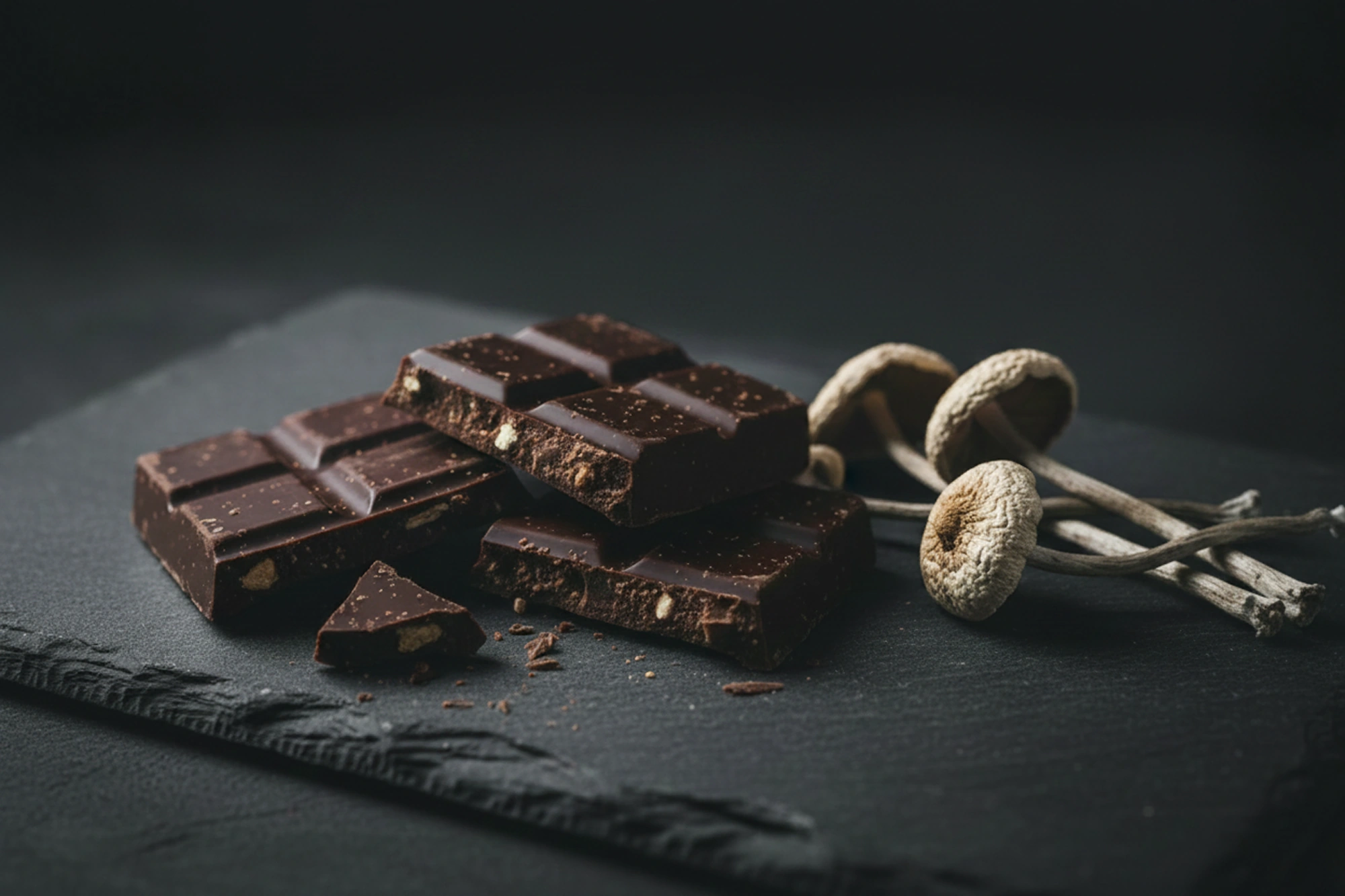
What Each Substance Does on Its Own
Before understanding the combination, it helps to be clear on what each brings independently. Psilocybin acts primarily on serotonin receptors — particularly the 5-HT2A receptor — and disrupts the default mode network, the brain system responsible for self-referential thinking and narrative consciousness. The result is an altered sense of self, time distortion, visual and perceptual changes and often a significant surfacing of emotion and subconscious content. Duration is typically 4–6 hours with a peak around hours 2–4.
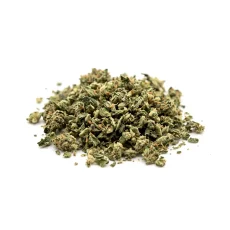
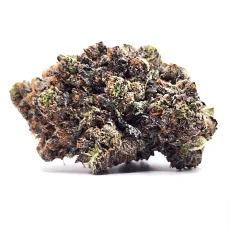
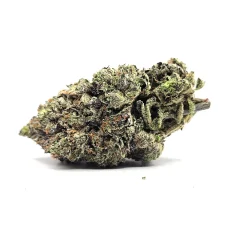
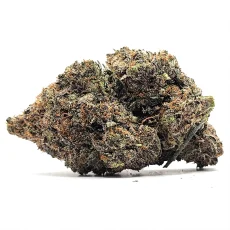
Cannabis acts on the endocannabinoid system via CB1 and CB2 receptors. At moderate doses it produces relaxation, mood elevation and perceptual shifts — heightened sensory experience, altered time perception and sometimes anxiety at higher doses. Duration varies by format: inhaled cannabis peaks within 15 minutes and fades within 1–3 hours.
| Psilocybin | Cannabis | |
| Primary receptors | Serotonin (5-HT2A) | CB1 / CB2 (endocannabinoid) |
| Onset | 30–60 min | 5–15 min (inhaled) |
| Peak | 2–4 hours | 30–90 min |
| Duration | 4–6 hours | 1–3 hours (inhaled) |
| Primary effects | Perceptual, emotional, ego disruption | Relaxation, mood shift, sensory enhancement |
What Happens When You Combine Them
The interaction between cannabis and psilocybin is not fully understood pharmacologically — there’s limited formal research. What is well-documented comes from user reports and harm-reduction communities, and the picture is consistent enough to draw some useful conclusions.
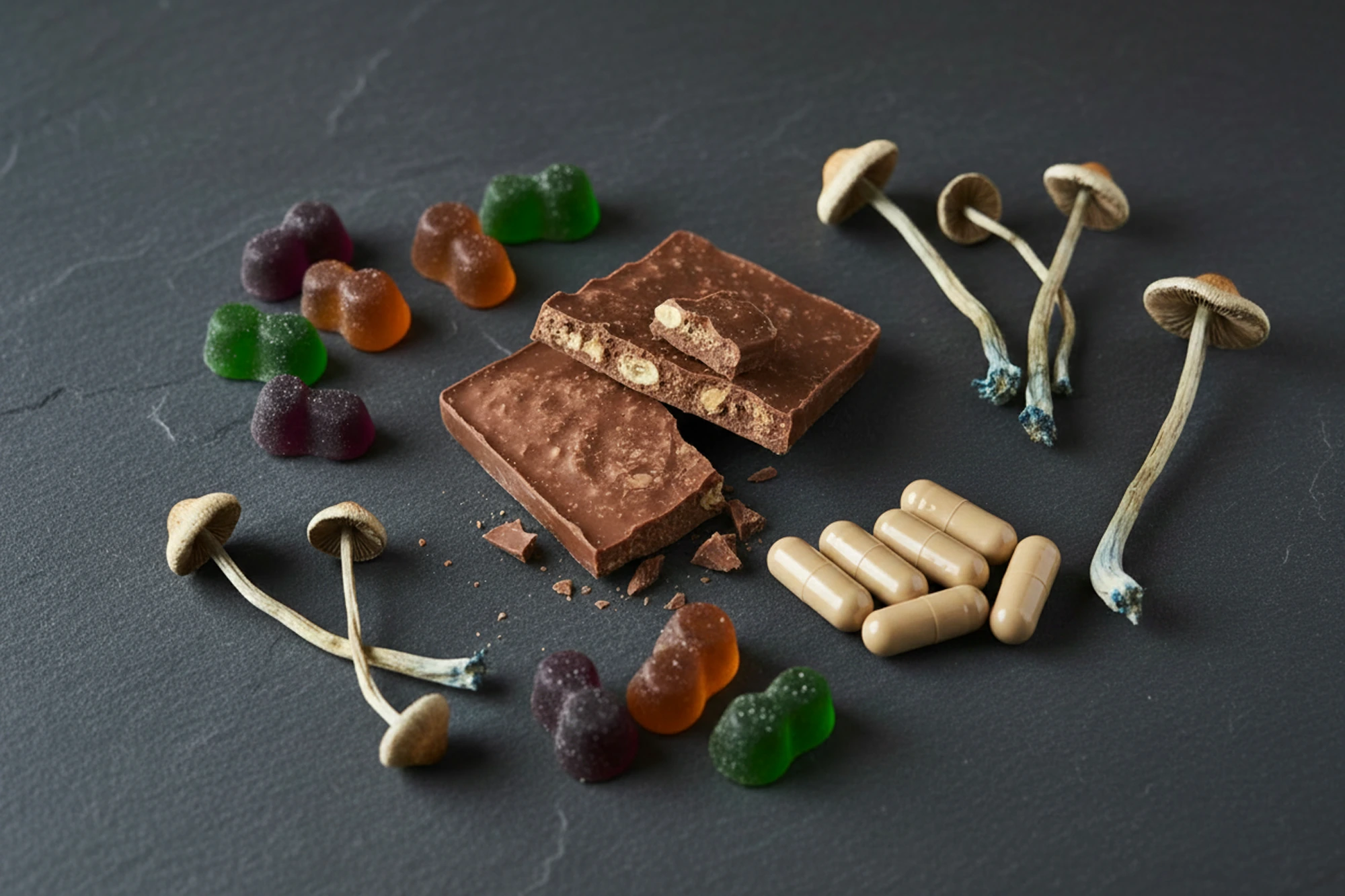
Amplification
Cannabis reliably amplifies a psilocybin experience — in both directions. If the psilocybin experience is going well, cannabis can deepen the visuals, intensify the emotional resonance and extend the sense of connectedness that many users find meaningful. If the psilocybin experience is difficult or heading in an uncomfortable direction, cannabis almost always makes that more intense too. This is the central dynamic to understand. Cannabis is not a neutral addition. It turns up the volume on whatever is already happening.
Time Distortion
Both substances independently alter time perception. Combined, this effect becomes pronounced — sometimes disorienting. Users frequently report that time feels completely meaningless during the combination, which can be interesting or unsettling depending on your state of mind.
Anxiety Risk
THC-induced anxiety and psilocybin-induced anxiety are both real risks independently. Combined, they can compound quickly. High-THC cannabis strains in particular carry elevated risk during a psilocybin experience. If cannabis is part of your psilocybin session, low-THC or high-CBD products are significantly safer than full-potency flower. A CBD-dominant product with minimal THC may provide the grounding effect some users seek without meaningfully increasing anxiety risk.
Timing Makes a Significant Difference
When you introduce cannabis relative to the psilocybin experience dramatically changes the effect.
| Timing | Common Effect |
| Before psilocybin onset | May ease pre-experience anxiety but can complicate the come-up |
| During come-up (30–90 min in) | Significant amplification — high risk for intensity |
| At peak (2–3 hours in) | Intense amplification — experienced users only |
| During come-down (4–5 hours in) | Many users find this most manageable — softens the transition |
| After the experience | Generally well-tolerated — helps with integration and sleep |
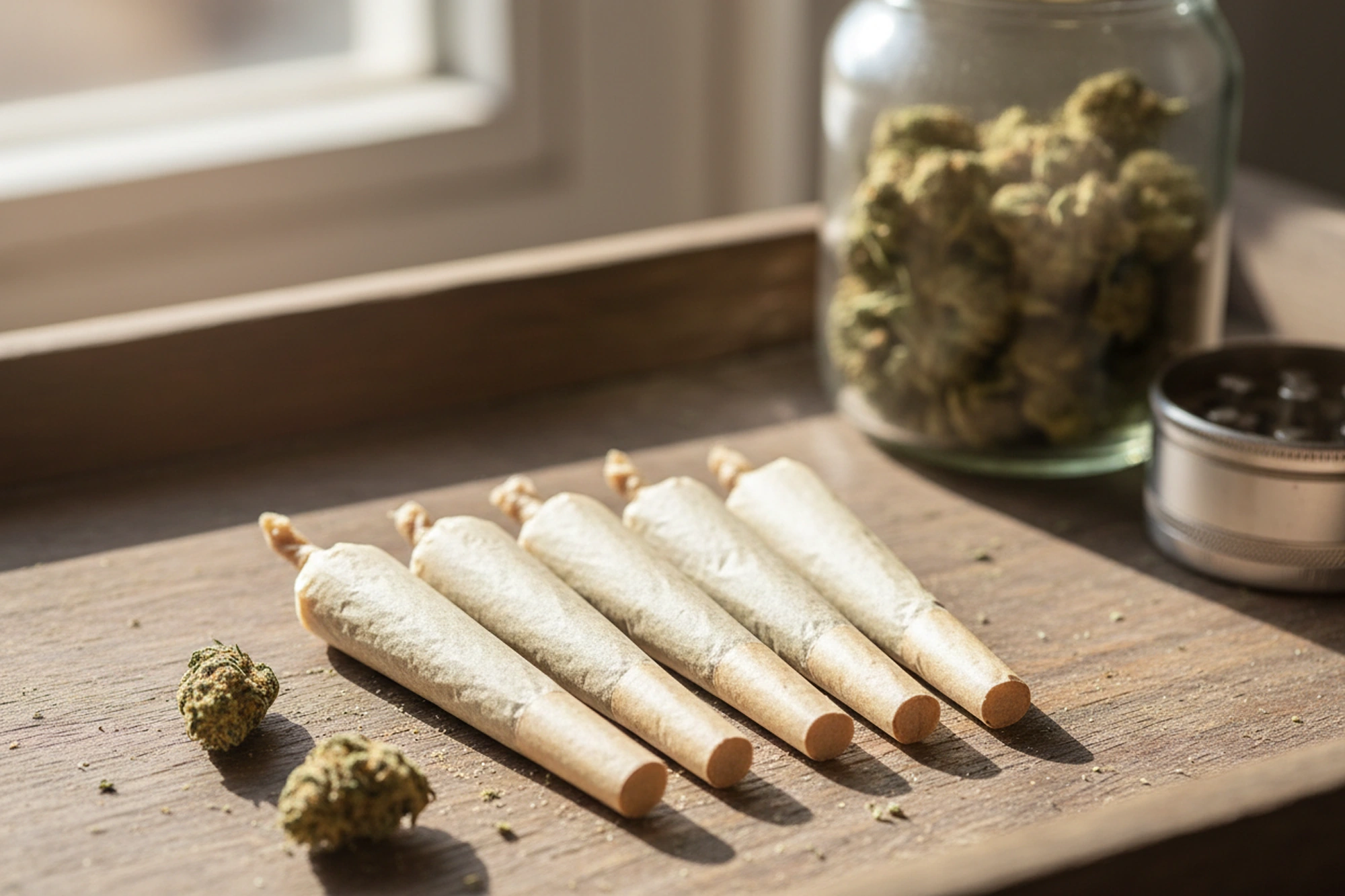
The come-down window is where most experienced users introduce cannabis if they’re going to use it at all. The psilocybin peak has passed, the intensity has softened and dried cannabis flower can smooth the transition back to baseline. This is the lowest-risk timing for the combination and the one most consistently reported as positive.
Who Should Avoid This Combination
Some people should not combine cannabis and psilocybin regardless of timing or dose:
- Anyone with anxiety sensitivity or a history of panic attacks
- First-time psilocybin users — understand each substance individually first
- Anyone in a difficult emotional period — the amplification effect works on emotional state too
- Anyone prone to cannabis-induced paranoia
- Anyone using psilocybin in a therapeutic or intentional context — cannabis complicates the experience in ways that may undermine that intention
If you have any doubt, err toward doing one or the other — not both. There is no meaningful benefit to combining them that justifies the added risk for someone who isn’t confident and experienced with both substances individually.
If You Do Choose to Combine – Practical Guidelines
- Use low-THC or high-CBD cannabis. High-potency flower significantly increases anxiety risk. A CBD product with minimal THC is the safest option if you want the grounding effect without amplification
- Start with a conservative psilocybin dose. This is not the session to push your dose ceiling
- Have a trip sitter. Someone sober, trusted and calm who knows what both substances do
- Be in a safe, comfortable environment. Familiar space, no obligations, no surprises
- Don’t introduce cannabis during the come-up. The 30–90 minute window after ingesting psilocybin is when the experience is least stable — cannabis during this window frequently produces difficult outcomes
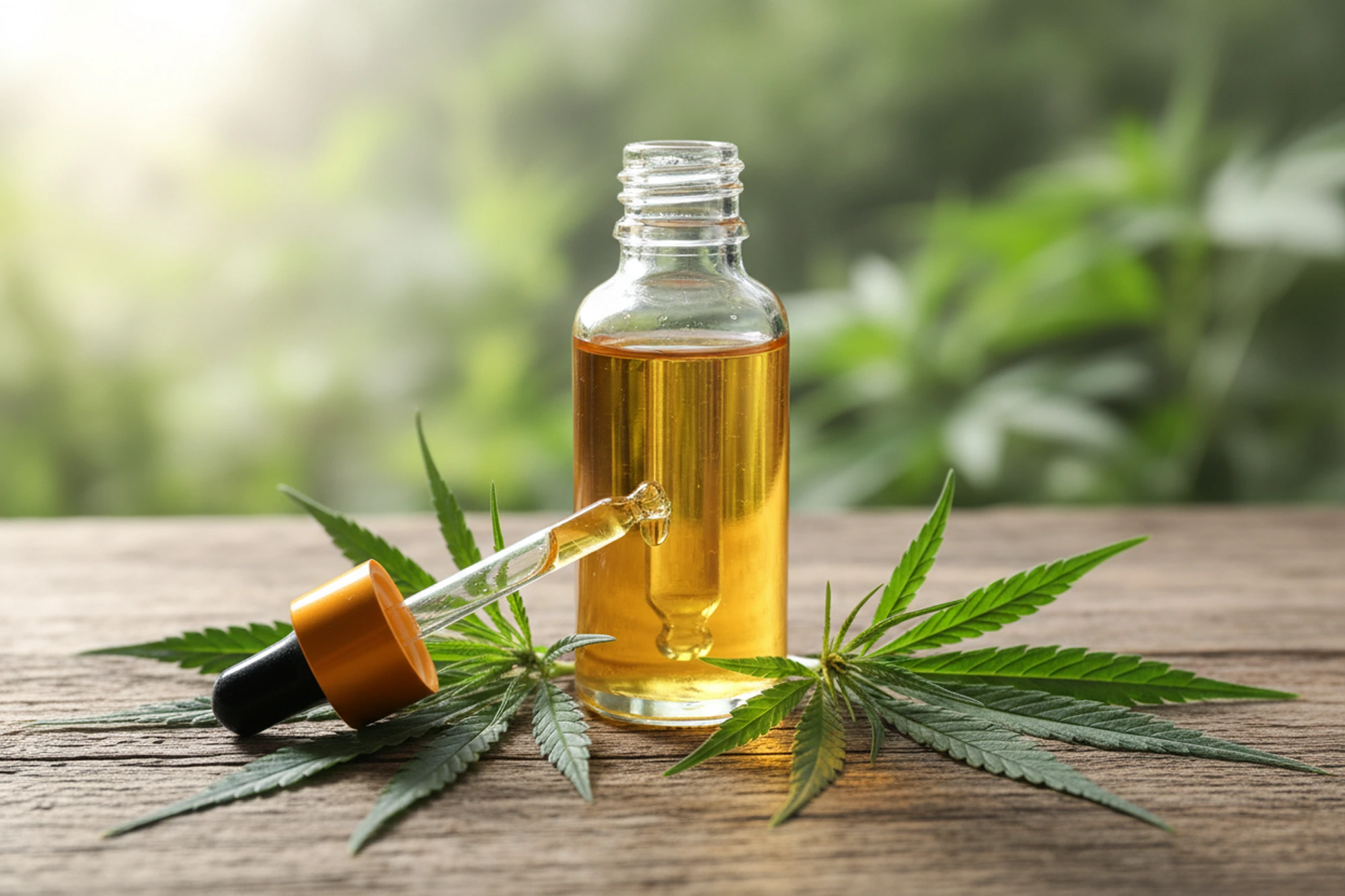
- Have CBD on hand. If either experience becomes overwhelming, CBD may help moderate THC effects specifically
What Experienced Users Actually Report
The combination gets described in two distinct ways depending on context. When it works — right dose, right timing, right mindset and setting — users describe a deepening of the psilocybin experience, more vivid and emotionally resonant, with cannabis providing a sense of bodily ease that psilocybin alone doesn’t always deliver. When it doesn’t work, the reports are consistent: anxiety that spiraled faster than expected, an experience that felt out of control and difficult to navigate, and a wish that they’d left the cannabis out entirely.
The pattern is clear enough. This combination rewards experience and preparation and punishes impulsivity. It is not a casual add-on for a recreational session. Treat it with the respect both substances independently deserve.
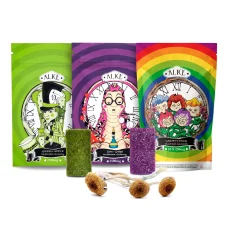
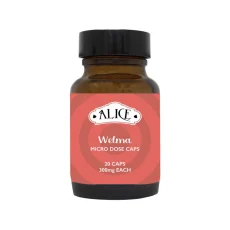
Explore Weed Market’s psilocybin collection — dried mushrooms, mushroom gummies and microdose capsules — alongside our full range of CBD products and cannabis flower. Fast, discreet delivery anywhere in Canada. New customer? Use code WELCOME10 for 10% off your first order plus free shipping with no minimum.